
Japanese supercomputer explains Webb's Little Red Dots
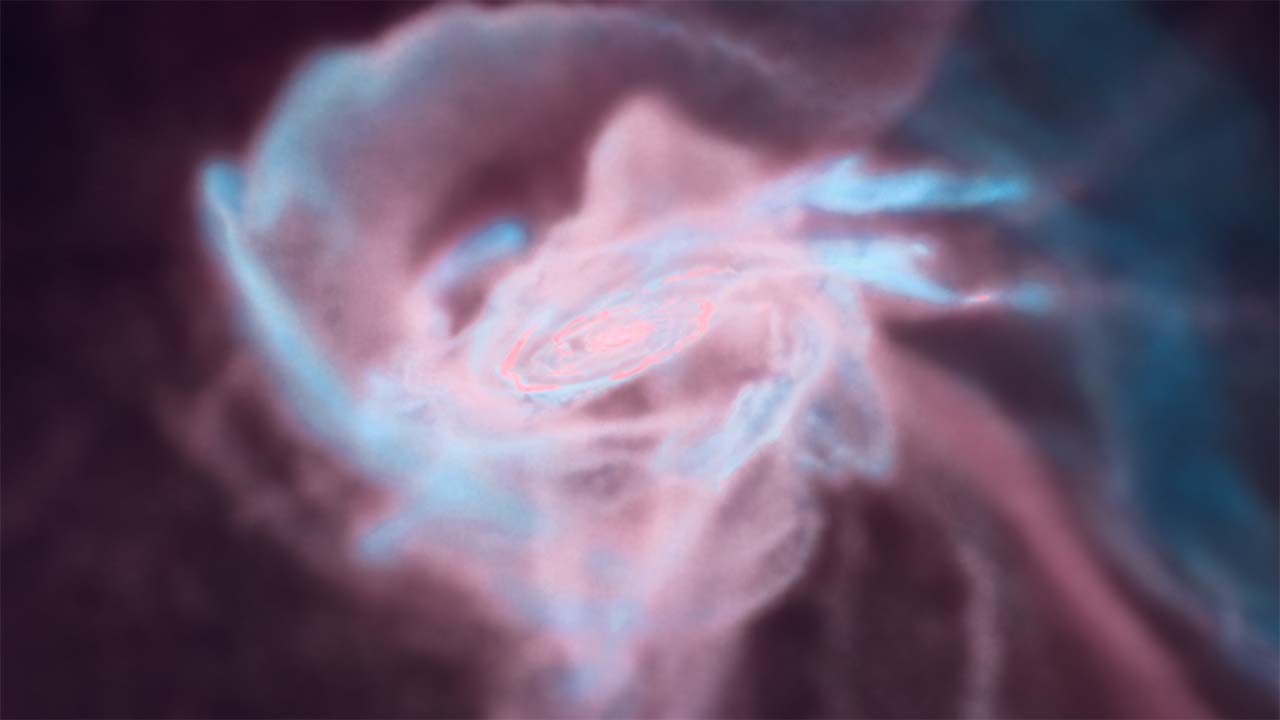
Sunmyon Chon of the Max Planck Institute for Astrophysics headed the simulation effort on the ATERUI III machine at the National Astronomical Observatory of Japan. The runs, the most detailed of the early Universe, start with conditions around a young galaxy and zoom into gas clouds. Intense far‑ultraviolet (FUV) radiation from nearby galaxies suppresses star formation, letting the gas collapse into a supermassive star that becomes a black‑hole seed. Encircled by a dense gas disk, the seed can accrete at rates dozens of times faster than present‑day black holes, producing a good match to the observed dots.
Astronomers now have a physical explanation for one of Webb's biggest puzzles without invoking exotic physics.
Source: Japanese Supercomputer Explains Webb’s Little Red Dots | NAOJ - National Astronomical Observatory of Japan (nao.ac.jp).
Written by the HappyGood desk from the primary source linked above and checked against it. Every story links its source. Corrections: [email protected].
More from the archive
- Assam teenager wins gold at National Karate Championship days after floods September 19, 2026
- EverDye develops pigments that could cut fabric dyeing energy tenfold September 19, 2026
- Teeth from Thomas the T. rex reveal a human-like body temperature September 19, 2026
- Jim Al-Khalili to take on time in the 2026 Christmas Lectures September 19, 2026
- Kenyan mango grower turns to integrated pest management after moth infestation September 18, 2026