
CosmicWatch detector makes invisible cosmic particles visible
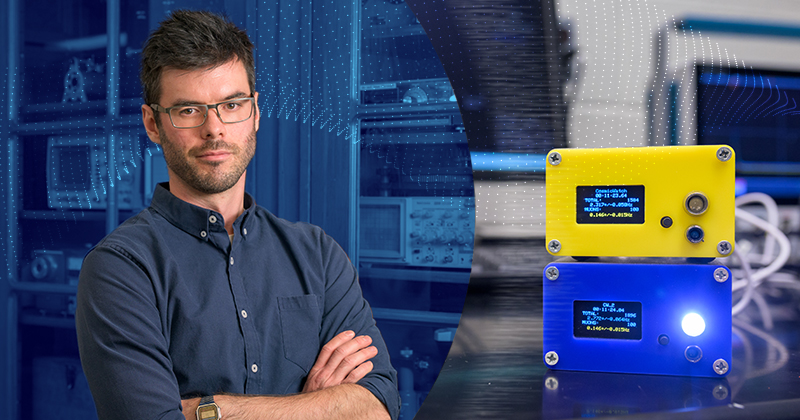
Spencer Axani, a physics professor at the University of Delaware, invented a particle detector called CosmicWatch. About the size of a box of animal crackers, it is built from roughly $100 in electronic parts. It lights up and counts muons, particles created when cosmic rays strike Earth's atmosphere. Students use it too. "CosmicWatch detectors allow us to do far more physics at a dramatically lower cost, in a compact and portable form, opening the door to many new kinds of experiments and outreach opportunities," Axani told UDaily on January 7.
High school students and physicists worldwide gain an affordable way to study particle physics, without expensive lab equipment.
Source: Making the invisible visible | UDaily (udel.edu).
Written by the HappyGood desk from the primary source linked above and checked against it. Every story links its source. Corrections: [email protected].
More from the archive
- Assam teenager wins gold at National Karate Championship days after floods September 19, 2026
- EverDye develops pigments that could cut fabric dyeing energy tenfold September 19, 2026
- Teeth from Thomas the T. rex reveal a human-like body temperature September 19, 2026
- Jim Al-Khalili to take on time in the 2026 Christmas Lectures September 19, 2026
- Kenyan mango grower turns to integrated pest management after moth infestation September 18, 2026