
Chinese company reports first hydrogen-boron fusion reaction on its own device
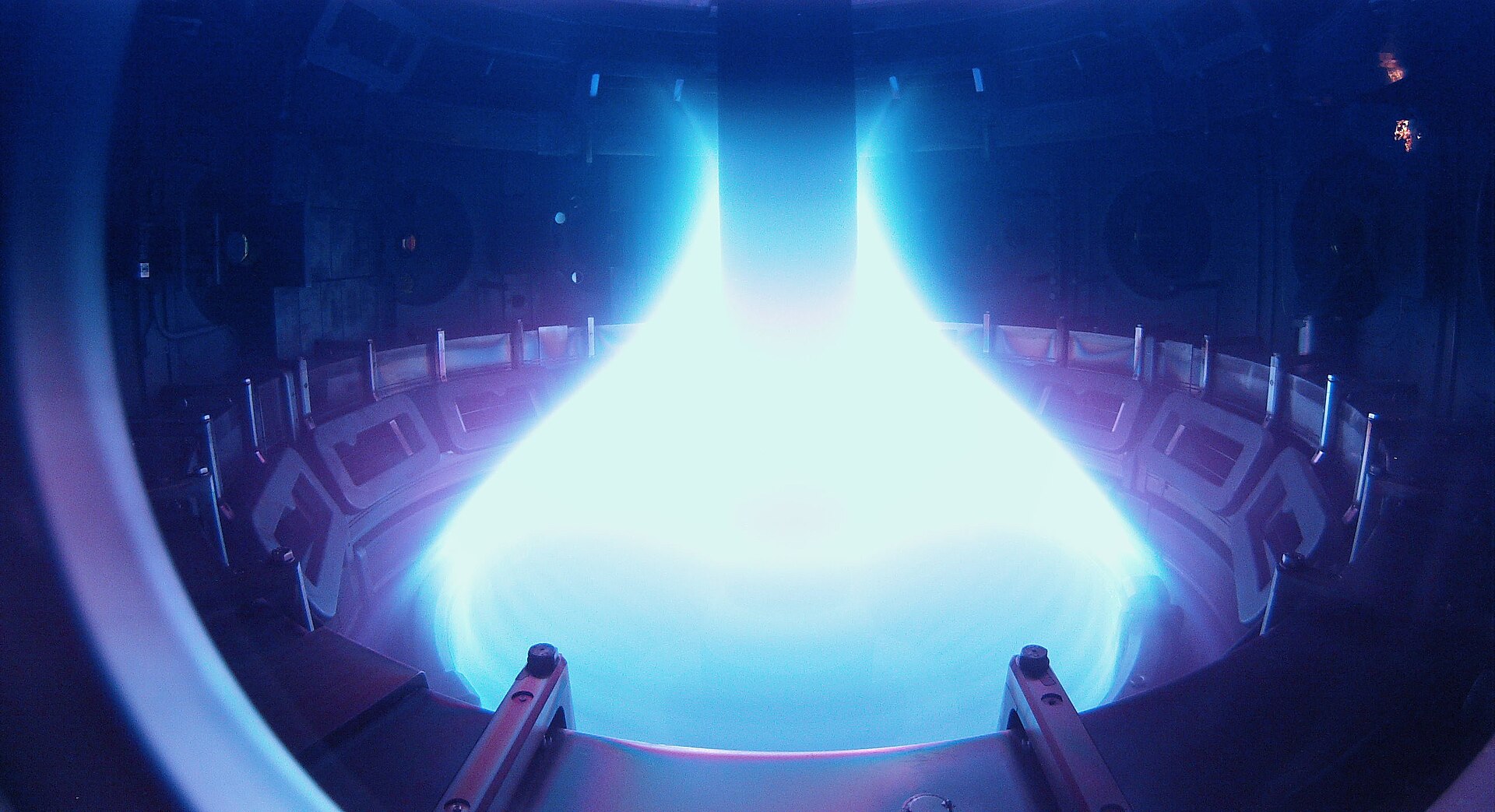
Late one night in mid-September, more than 20 alpha-particle signals appeared at once on a screen in ENN's experimental hall, with matching timing, according to a report in Science and Technology Daily on 8 October, which the company has republished on its website. Alpha particles are helium nuclei, the particles this reaction gives off. A week later, after repeated checks and review by experts, the team confirmed that the Xuanlong-50U had produced hydrogen-boron fusion reactions.
ENN says it is the first time a commercial fusion company has achieved the reaction on its own device, and the first time a Chinese magnetic-confinement machine, one that holds the hot fuel in place with magnetic fields, has run clean, neutron-free fusion with advanced fuel. Most fusion research worldwide uses deuterium and tritium. Liu Bing, who leads ENN's hydrogen-boron technology work, told the newspaper that hydrogen and boron are among the most plentiful elements in nature and that the reaction produces no neutrons.
The reaction is hard to reach. It needs plasma, a gas so hot that its atoms are torn into charged particles, at several hundred million degrees, and the chance of two nuclei fusing is very small. Shi Yuejiang, ENN's chief experimental scientist, said the team fired beams of fast particles into the plasma and used radio waves to push some protons to 162 to 200 kiloelectronvolts, an energy band known as the reaction's first resonance peak, where the chance of fusion rises sharply.
The device now detects about 100 million alpha particles a second. Liu described this as a first breakthrough and said that keeping fusion energy output steady and turning it into electricity is a far larger challenge. Shi said the team will next work on raising the reaction rate, scaling up the device and its engineering, and studying burning plasma, the stage at which the fusion reactions themselves keep the plasma hot. Dieter Hoffmann, a professor at Xi'an Jiaotong University, said the result is not yet a fusion demonstration that produces energy, but called it a major scientific milestone for advanced-fuel fusion research. Zhao Yongtao, also of Xi'an Jiaotong University, cautioned that observing fusion reactions does not prove that fusion energy is feasible.
ENN is not the only group on this path. In 2023 the US company TAE Technologies first produced hydrogen-boron reactions on the LHD at Japan's National Institute for Fusion Science, a stellarator, which holds plasma in place with twisted magnetic coils; ENN's result came on a device it developed itself. The company aims to light what it calls the first lamp of hydrogen-boron fusion by 2030 and to reach a steady, high-power demonstration power reactor by 2035.
Source: 科技日报:新奥氢硼聚变获里程碑式突破 (ENN Science and Technology (republishing Science and Technology Daily)).
Written by the HappyGood desk from the primary source linked above and checked against it. Every story links its source. Corrections: [email protected].
More from the archive
- Georgia students stage fake cafeteria fight to surprise principal on 51st birthday October 21, 2026
- Two Girl Guides buy four ukuleles for Amblecote dementia music group October 20, 2026
- Tenby engineer walks 186 miles in ten days for Wales Air Ambulance October 20, 2026
- Blind Herefordshire writer gains international acclaim for debut short film Blind Faith October 18, 2026
- At 91, Barrie man stays active every day at East Bayfield Community Centre October 18, 2026