
Wet winter brings vast flower blooms to Chile’s Atacama Desert
Parts of northern Chile’s Atacama Desert turned red-purple, green and white in spring 2026 after an unusually wet winter woke seeds lying dormant in the soil. Scientists say the flowering may be the region’s most extensive of the satellite era. Satellite images taken on September 14 and October 24 show the bloom at different stages in one of Earth’s driest places.
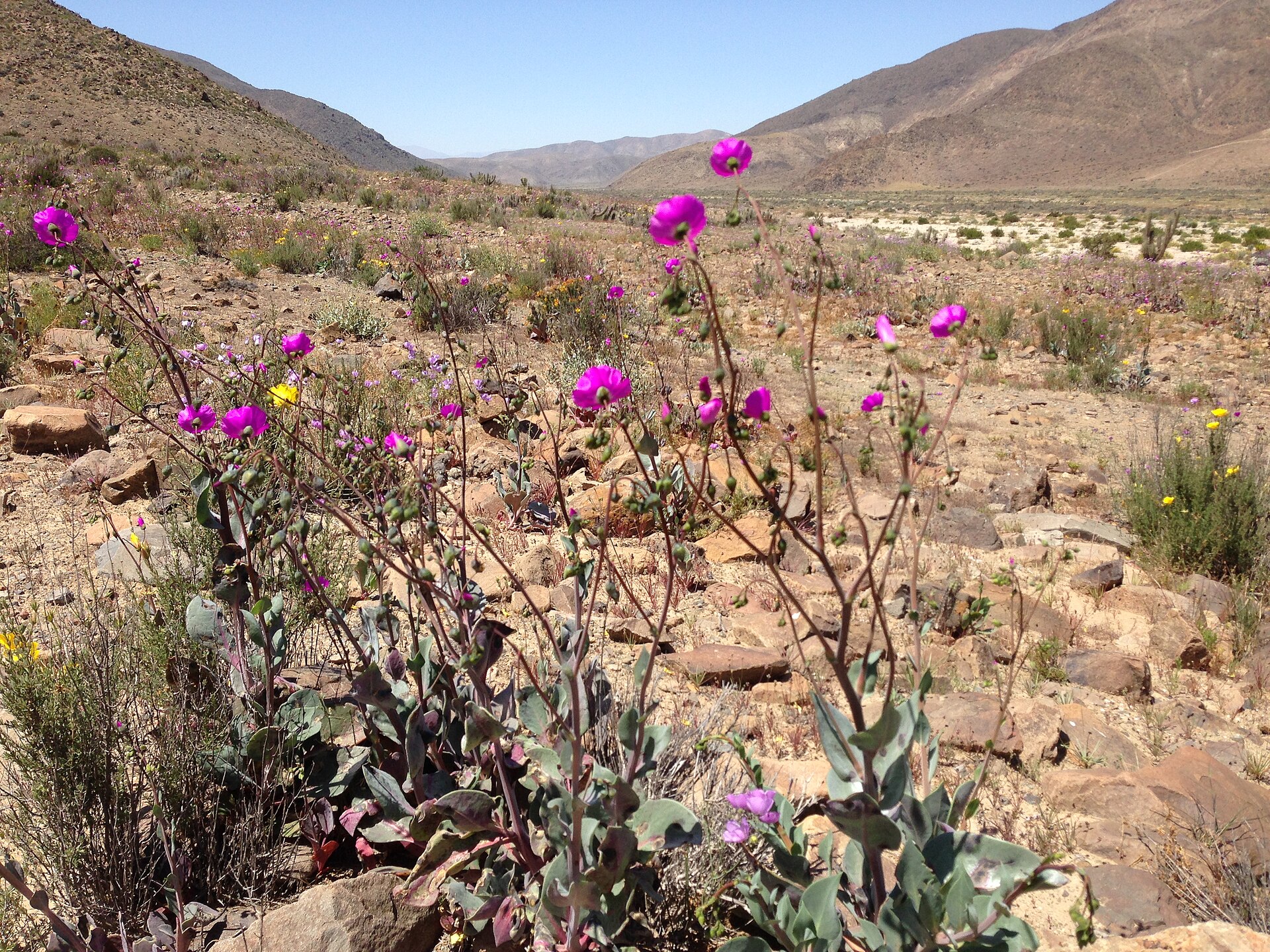
About 30 kilometers (20 miles) southwest of Copiapó, near the eastern sector of Desierto Florido National Park, the October 24 images show vast red-purple patches of flowers called pata de guanaco. Roberto Chávez, a scientist who studies landscapes through observations taken from a distance at Pontificia Universidad Católica de Valparaíso, identified them as most likely Cistanthe longiscapa or another Cistanthe species. Chávez and colleagues photographed the flowers that same day.
The researchers are using satellite data, drones and digital cameras to map how the bloom’s biodiversity, its variety of living things, changes across places and over time. The project aims to inform land-use planners and conservation managers.
About 50 kilometers (30 miles) southwest of Copiapó, the September satellite scene shows green areas capped with white: blooms of flowers called suspiros. Andres Moreira-Muñoz, who studies plant geography at the same university, identified them as Nolana, probably Nolana baccata. Researchers photographed the Nolana-covered hillsides on September 24, 2026. The area is recognised for its biological significance, including its flowering landscape.
The rain came as El Niño strengthened in the tropical Pacific. Changes in atmospheric pressure shifted storm tracks towards the equator. Beginning in mid-July, storm fronts fed by an atmospheric river, a concentrated flow of moisture through the air, brought one of the heaviest July rain events in decades to a long stretch of Chile, according to Dirección Meteorológica de Chile. August storms then blanketed parts of the Atacama Desert in rare snow.
A 2019 study used NASA’s long-term vegetation record to identify 13 Atacama Desert blooms between 1981 and 2015. Compared with those blooms, Moreira-Muñoz said the 2026 event appears to be the most significant for its extent, intensity and duration, at least since researchers began using remote sensing, or observations taken from a distance.
Source: El Niño Rains Paint the Atacama - NASA Science (science.nasa.gov).
Written by the HappyGood desk from the primary source linked above and checked against it. Every story links its source. Corrections: [email protected].
More from the archive
- Glass salp is first salp species known to live only in deep sea November 25, 2026
- Oyster-farming family honoured for rescuing more than 100 neighbours November 24, 2026
- Steve Guest walks again after back operation and celebrates 79th birthday November 24, 2026
- Seven families adopt 10 children at Long Island Aquarium November 24, 2026
- Dark Energy Camera captures most detailed view of Betta Fish Nebula November 24, 2026