
Six beavers released near Loch Ness after 500 years
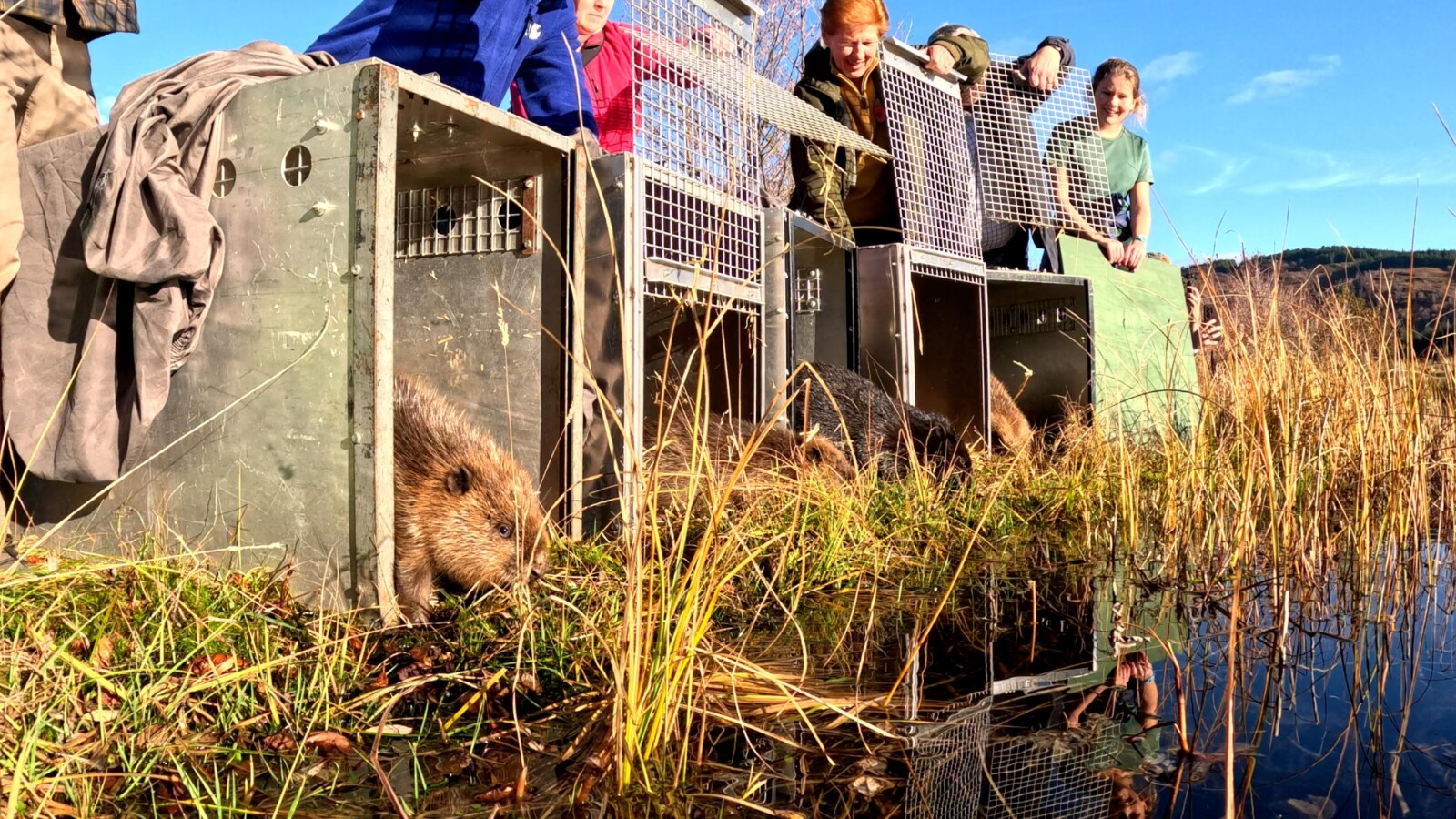
A family of six beavers was released on 4 November into a small loch at Dundreggan in Glenmoriston, 500 years after the species was last recorded beside Loch Ness before being hunted to national extinction. The estate lies in the Loch Ness catchment, the area whose rivers and streams drain into the loch. Relocated from elsewhere in Scotland, the animals are the first arrivals in the Ness Beaver Project.
Trees for Life and Beaver Trust, supported by Forestry and Land Scotland, plan to reintroduce at least 15 beaver family groups into lochs, small lochs and rivers around Loch Ness over the next three years. NatureScot granted the licence on 30 October, following Trees for Life’s summer application.
“It has been profoundly rewarding to release the first beavers at Dundreggan, marking the start of their return to the Loch Ness catchment,” said Dr Roisin Campbell-Palmer, head of restoration at Beaver Trust.
According to Trees for Life, beavers create pools, wetlands and woodland gaps by digging channels, cutting trees and building dams. The charity says these habitats support frogs and dragonflies, with insects providing food for birds and bats. It says dams on smaller streams slow water and trap sediment, helping improve water quality, while beaver wetlands can reduce downstream flooding, hold water through dry spells and provide damp refuges for wildlife during wildfires.
The project follows extensive discussions with local communities and land managers. Trees for Life’s locally based beaver officer and Beaver Trust staff will provide ongoing support, and a group will be established to monitor the animals and help address problems. Future release sites will be announced after the animals have been released so they can settle without disturbance.
Once the beavers have settled at Dundreggan, Trees for Life plans guided tours on its 10,000-acre estate, giving visitors opportunities to spot the animals and find signs of their activity.
The project aims to allow beaver populations to connect and grow across extensive woodland and hundreds of kilometres of river and loch banks around Loch Ness.
Source: Historic return of beavers to waters around Loch Ness - Trees for Life (treesforlife.org.uk).
Written by the HappyGood desk from the primary source linked above and checked against it. Every story links its source. Corrections: [email protected].
More from the archive
- Glass salp is first salp species known to live only in deep sea November 25, 2026
- Oyster-farming family honoured for rescuing more than 100 neighbours November 24, 2026
- Steve Guest walks again after back operation and celebrates 79th birthday November 24, 2026
- Seven families adopt 10 children at Long Island Aquarium November 24, 2026
- Dark Energy Camera captures most detailed view of Betta Fish Nebula November 24, 2026