
Astronomers find oldest compact quasar pair
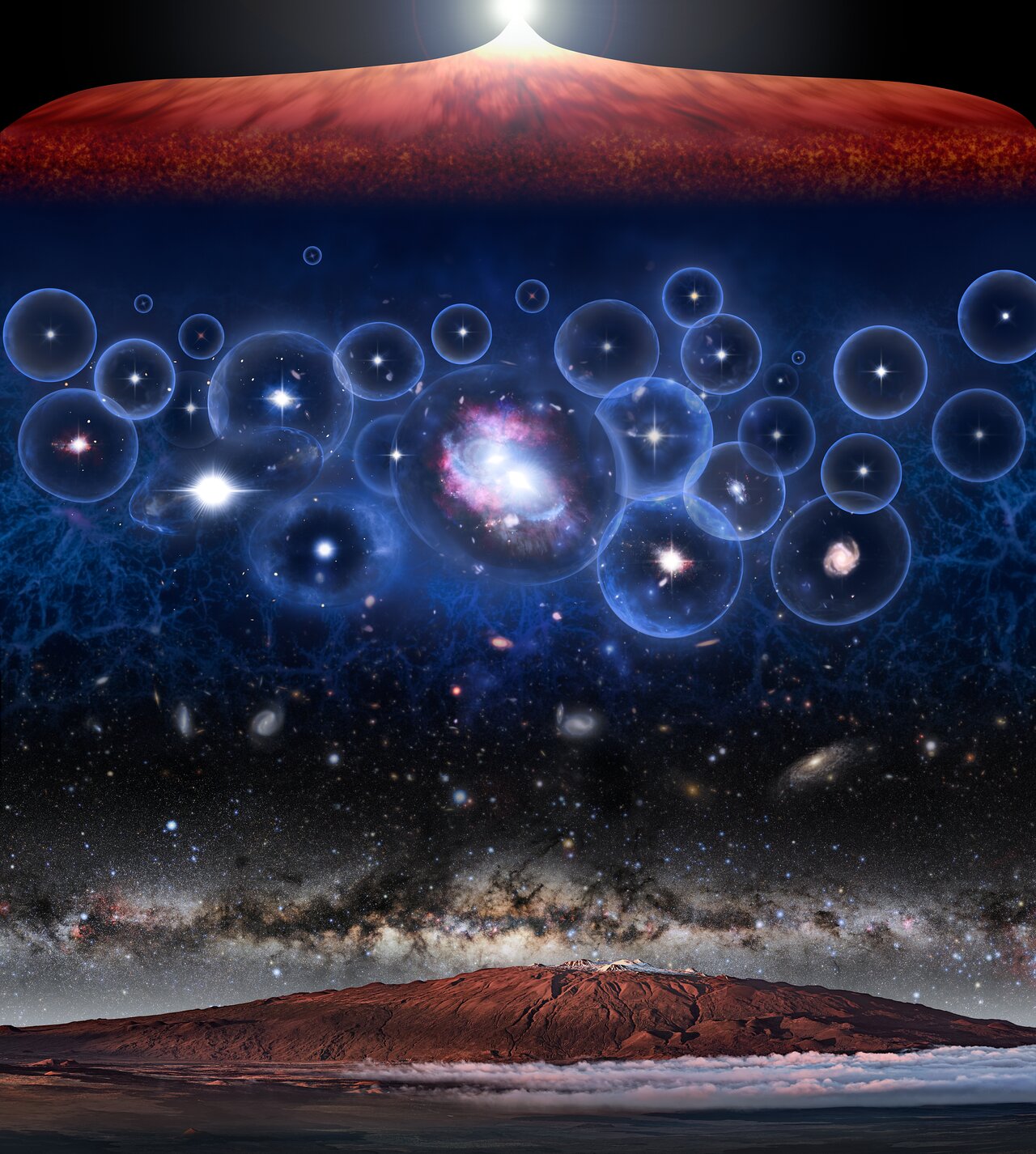
Astronomers have discovered the oldest compact pair of quasars ever observed, seen as they were only 900 million years after the Big Bang. Named J1602+4228AB and nicknamed Nāpōwawāʻenakaulua, the pair contains black holes with masses of 1.5 billion and 400 million times that of the Sun. Scientists have no definitive theoretical explanation for how they grew so massive so early. Silvia Onorato, a postdoctoral research associate at NSF NOIRLab, led the study, published in The Astrophysical Journal Letters. The discovery is the third known quasar pair from the early period called cosmic dawn.
Quasars shine as matter falls towards a supermassive black hole, releasing enough energy to outshine the stars in its host galaxy. This pair is separated by approximately 18,100 light-years, roughly one-fifth the diameter of the Milky Way Galaxy.
The team spotted a companion to quasar J1602+4228A while inspecting James Webb Space Telescope data from the Aether survey. Led by Emanuele Paolo Farina, the survey collected a sample of 200 quasars, representing 43% of all known quasars at this stage of cosmic history.
Follow-up observations with Gemini North on Maunakea in Hawai‘i distinguished the two objects despite their close spacing and the companion’s faintness. Clear conditions allowed the team to collect the data in two nights.
Differences in the objects’ spectra, the patterns in their light, favor a real pair over gravitational lensing, in which an object in front bends light to create the appearance of a second quasar. A lens model is still needed to rule out that explanation definitively.
The Hawaiian nickname was created by Larry Kimura through the A Hua He Inoa program. It draws on words referring to powerful darkness, reincarnation, radiant heat and a pair.
The team proposes that the pair may signal an unusually dense region where galaxy interactions fed star formation and black hole growth, providing a place to study how the first massive galaxies and their central black holes assembled together.
Source: Astronomers Discover Nāpōwawāʻenakaulua, the Oldest Compact Quasar Pair in the Universe - The Gemini North telescope on Maunakea and James Webb Space Telescope observed the pair of rapidly feeding... (noirlab.edu).
Written by the HappyGood desk from the primary source linked above and checked against it. Every story links its source. Corrections: [email protected].
More from the archive
- Glass salp is first salp species known to live only in deep sea November 25, 2026
- Oyster-farming family honoured for rescuing more than 100 neighbours November 24, 2026
- Steve Guest walks again after back operation and celebrates 79th birthday November 24, 2026
- Seven families adopt 10 children at Long Island Aquarium November 24, 2026
- Dark Energy Camera captures most detailed view of Betta Fish Nebula November 24, 2026