
Chicago Theatre opened on 26 October 1921 to capacity crowds
The Chicago Theatre opened on 26 October 1921 on North State Street in Chicago's Loop. Crowds packed the 3,880-seat theater during its opening week for The Sign on the Door, starring Norma Talmadge, with a 50-piece orchestra and a live stage show also on the bill. Promoted as the "Wonder Theatre of the World", it became the flagship of the Balaban and Katz theater chain. It is the oldest surviving grand movie palace.
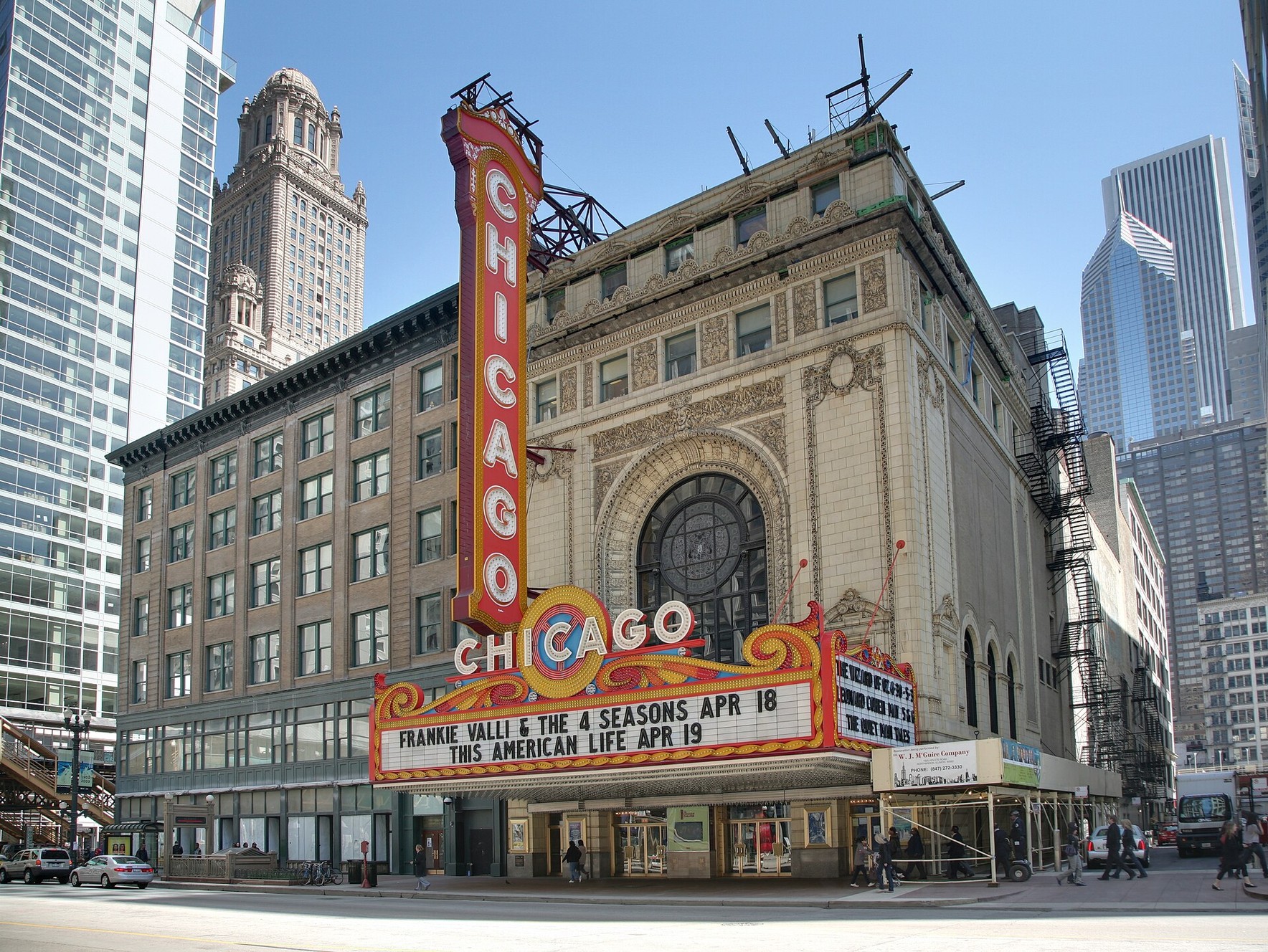
Poet Carl Sandburg, reporting for the Chicago Tribune, wrote that mounted police were needed to control the crowds. Inside, organist Jesse Crawford played a Wurlitzer pipe organ that could imitate the instruments of an orchestra. Orson Welles later recalled its sound: "Oh, yes, it was mighty."
Architects Cornelius W. Rapp and George L. Rapp designed the $4 million building in an ornate French-revival style. Chicago artist Louis Grell painted fourteen large, French-themed murals around the stage opening. The theater attracted moviegoers with plush surroundings and attentive service, including the early use of air conditioning. The approach was copied nationwide.
Live jazz became another draw. Balaban and Katz promoted "Syncopation Week" in September 1922, and its success made jazz bands regular attractions through the 1920s and into the 1930s. For Chicago's 1933 World's Fair, Grell was commissioned to repaint the murals, choosing Greek and Roman deities as his theme.
Business slowed in the 1970s. The Chicago Theatre Preservation Group bought the theater and adjoining Page Brothers Building in 1984, but its attempt to keep the venue running as a movie theater failed. It closed on September 19, 1985.
Renovation restored the theater's 1930s appearance and provided seating for 3,600. Frank Sinatra performed at its reopening on September 10, 1986, the culmination of a four-year preservation effort championed by the Landmarks Preservation Council of Illinois.