
Chang'e 1 launched as China's first lunar probe
Chang'e 1 launched from Xichang Satellite Launch Center in Sichuan Province on 24 October 2007, becoming the first satellite in the Chinese Lunar Exploration Program. A Long March 3A rocket carried the uncrewed spacecraft, which entered lunar orbit on 5 November. Its observations later produced an accurate, high-resolution three-dimensional map of the Moon's surface.
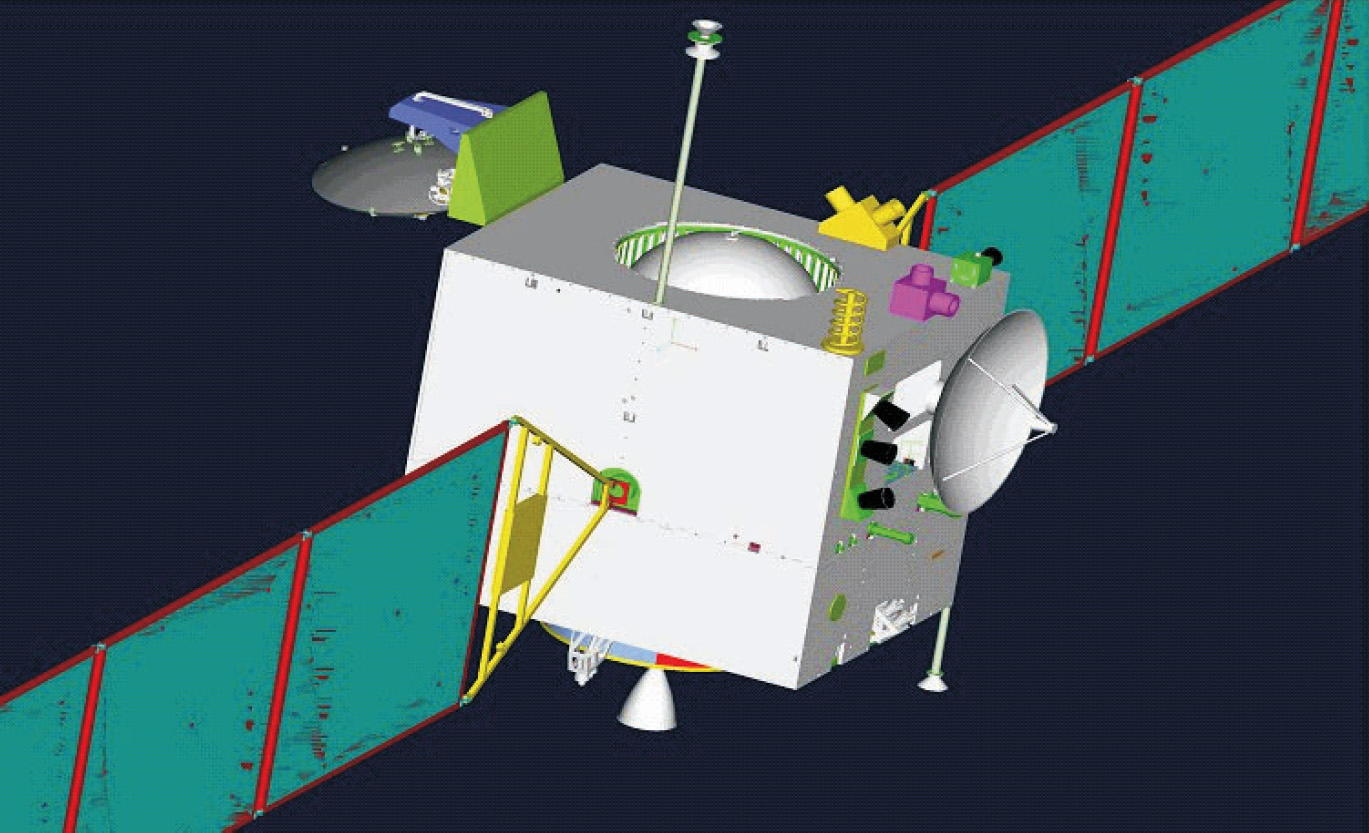
Named after Chang'e, the Chinese Moon goddess, the spacecraft took several years to prepare. Detailed design was completed by September 2004. Prototype development and testing finished before the end of 2005, with assembly and ground experiments completed before December 2006.
After launch, Chang'e 1 made three orbits around Earth. Engine firings stretched each orbit farther outward before a final firing on 31 October sent it towards the Moon. Further firings brought it into a circular orbit passing over the lunar poles. To mark its arrival, the probe transmitted 30 classical Chinese songs and musical pieces.
The first lunar picture reached Earth on 26 November 2007. A map covering the entire lunar surface was released on 12 November 2008, using observations collected between November 2007 and July 2008. The orbit was designed to cover polar areas missed by previous missions.
Chang'e 1 also became the first lunar probe to study naturally emitted microwave signals from the Moon at multiple frequencies. Its instrument measured those signals without transmitting its own.
Planned to operate for one year, the spacecraft remained in lunar orbit until 1 March 2009. The mission ended with an impact that the State Administration of Science, Technology and Industry for National Defense (China) described as planned and controlled. During its orbital mission, the probe transmitted 175 gigabytes of data.