
Bach's Fear and Hope cantata first performed in Leipzig
Johann Sebastian Bach led the Thomanerchor in the first performance of O Ewigkeit, du Donnerwort, BWV 60, in Leipzig on 7 November 1723. The church cantata, a work for voices and instruments, presents fear of death and hope of salvation as a conversation between two characters.
Fear sings as an alto; Hope answers as a tenor. Their exchange carries the first three movements. In the fourth, a bass representing Christ responds to Fear with words from the Book of Revelation. A four-part choir sings only in the closing hymn.
Bach composed the cantata during his first year as music director of Leipzig's main churches. Three weeks earlier, he had written another work featuring Fear and Hope, assigning both characters to one singer. In BWV 60, he gave each a separate voice.
The opening uses the first stanza of Johann Rist's 1642 hymn. Against its expression of fear, Hope sings Jacob's deathbed words from Genesis 49:18: "Lord, I await your salvation". Strings play a repeated trembling figure beneath the voices.
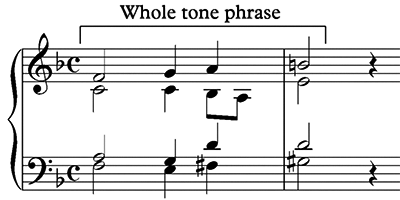
The closing movement sets the last stanza of Franz Joachim Burmeister's 1662 hymn Es ist genug. Alfred Dürr identifies Johann Rudolph Ahle as the melody's composer. It begins with four notes separated by whole tones, or steps of two semitones. Together they span a tritone, an interval also called "diabolus in musica". Dürr describes this as an extreme musical figure in Ahle's time, suited to depicting the soul's passage from life into death. The sequence later inspired Alban Berg to incorporate Bach's setting in his Violin Concerto.
The work's duration has been stated as 20 minutes. A surviving instrumental part provides evidence of a repeat performance sometime after 1735.