
New Zealand women cast their first parliamentary votes
Women in New Zealand voted in a parliamentary election for the first time on 28 November 1893, after about two decades of campaigning led by Kate Sheppard and other advocates. New Zealand became the first nation in which all women had the right to vote in parliamentary elections. Governor Lord Glasgow approved the electoral bill on 19 September 1893, giving women aged 21 or older the vote. Elections for the Māori electorates followed on 20 December.
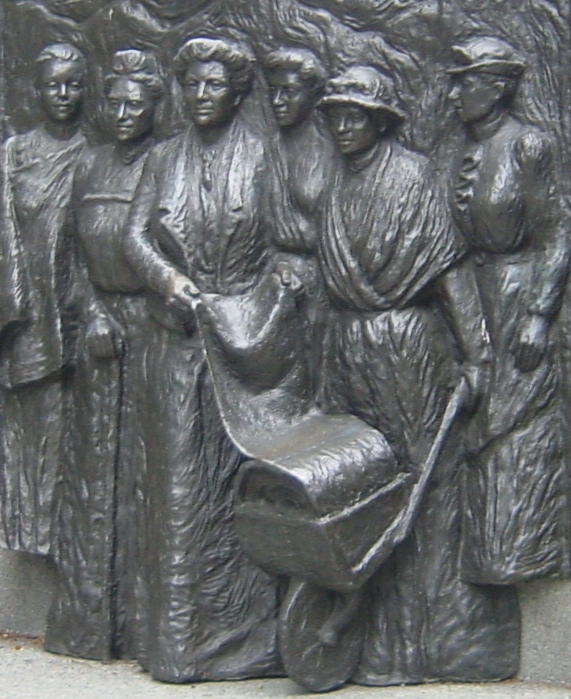
Women had been excluded from politics in early colonial New Zealand, but public opinion began to change in the latter half of the nineteenth century. Bills extending the vote to women were narrowly defeated in Parliament in 1878, 1879 and 1887.
Members of the Women's Christian Temperance Union, political franchise leagues and trade unions gathered signatures for successive petitions. Over 9,000 signatures reached Parliament in 1891, followed by almost 20,000 in 1892. The 1893 petition carried nearly 32,000 signatures, almost a quarter of New Zealand's adult European female population.
Opponents argued that politics lay outside women's role in the home and family. Campaigners countered that women voters would encourage policies that protected and nurtured families. The campaign was also tied to the movement to prohibit alcohol, drawing opposition from politicians who supported the alcohol industry.
Sheppard, a Women's Christian Temperance Union activist, became a leading advocate for political action on women's rights. Earlier campaigners included Mary Müller, who published New Zealand's first pamphlet on women's suffrage under a pseudonym in 1869, and Mary Ann Colclough (Polly Plum), an active advocate during the 1870s.
As the electoral bill reached its final parliamentary stages in 1893, supporters held mass rallies and sent telegrams to Members of Parliament. They gave parliamentary allies white camellias to wear in their buttonholes. The Upper House passed the bill by 20 votes to 18 on 8 September 1893.