
Jimi Hendrix is born in Seattle
Johnny Allen Hendrix was born in Seattle on November 27, 1942, the first of his mother Lucille's five children. In 1946 his parents changed his name to James Marshall Hendrix. As Jimi Hendrix, he is widely regarded as one of the greatest and most influential guitarists of all time. The Rock and Roll Hall of Fame inducted him in 1992 as part of his band, the Jimi Hendrix Experience, and calls him "arguably the greatest instrumentalist in the history of rock music."
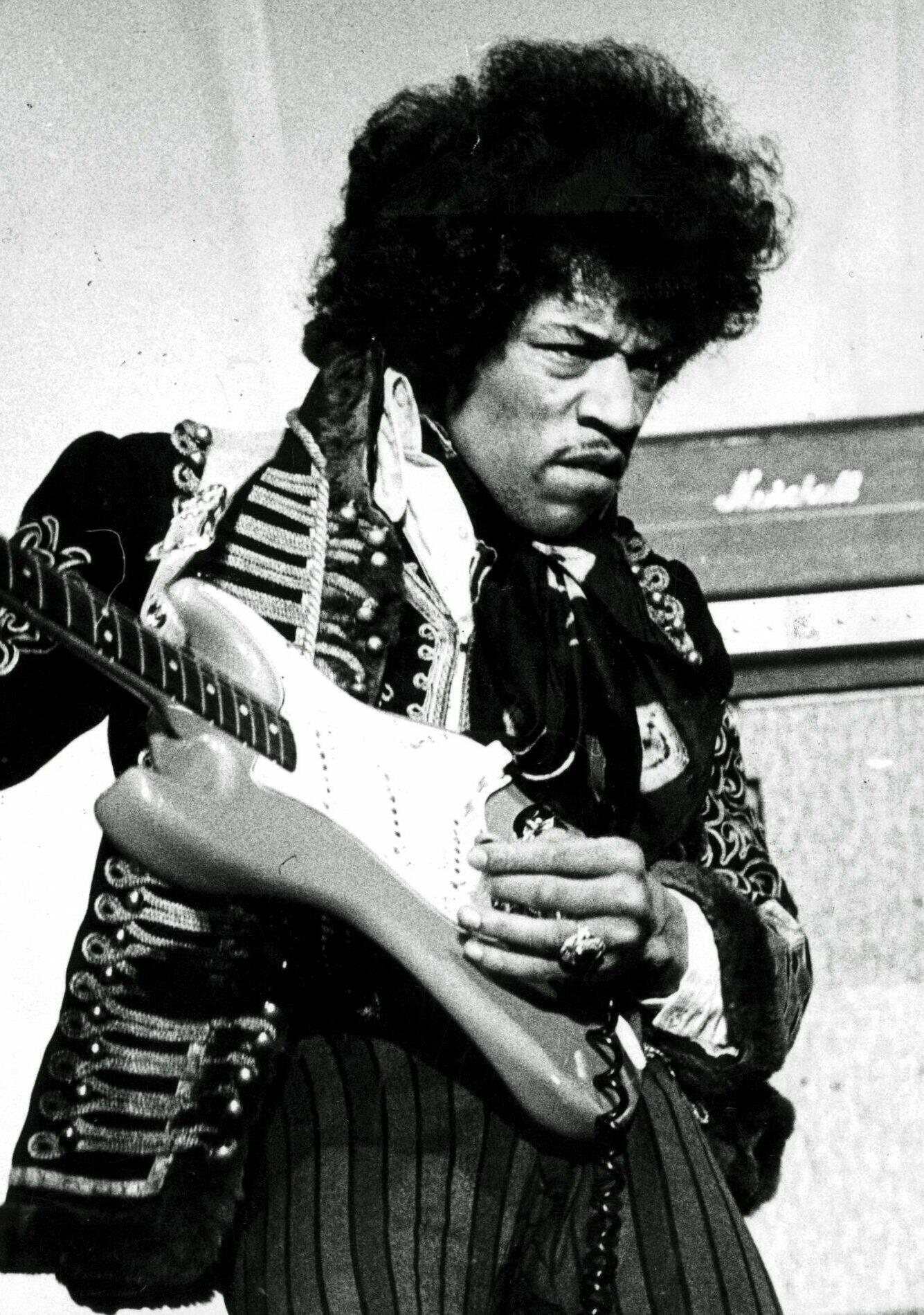
His father, Al, was stationed with the US Army in Alabama when the boy was born. He was being held in the stockade at the time, and a telegram brought him the news. Al was discharged on September 1, 1945. Two months later he went to the Berkeley, California, home of a family friend, Mrs. Champ, who had cared for the boy, and saw his son there for the first time.
In the mid-1950s, at Horace Mann Elementary School, Hendrix carried a broom around to imitate a guitar. The school social worker wrote asking for funding meant for underprivileged children so he could have a real guitar. She did not get it, and his father would not buy him one. In 1957 Hendrix was helping his father clear garbage from an older woman's home when he found a ukulele with only one string. She told him he could keep it. He learned by ear, picking out single notes along to Elvis Presley songs, particularly "Hound Dog". He began playing guitar at 15.
He went on to play on the Chitlin' Circuit, backing the Isley Brothers and later Little Richard. Chas Chandler, bassist of the Animals, became his manager, and Hendrix moved to England in late 1966. Within months he had formed the Jimi Hendrix Experience with bassist Noel Redding and drummer Mitch Mitchell and had three UK top-ten hits, "Purple Haze" among them. His performance at the Monterey Pop Festival in 1967 made him famous in the US. Electric Ladyland (1968) was his only number-one album on the Billboard 200. He headlined Woodstock in 1969, and he died in London in September 1970, aged 27.
He liked overdriven amplifiers played loud. He was instrumental in popularising the sound of amplifier feedback, the howl that comes when a guitar picks up its own amplified sound, which players had previously considered undesirable. Rolling Stone wrote that he turned feedback, distortion and other effects "into a controlled, fluid vocabulary every bit as personal as the blues with which he began."