
A candle, a grandmother's chisel and Howard Carter's first look into Tutankhamun's tomb
On 26 November 1922, Howard Carter made a "tiny breach in the top left-hand corner" of a doorway in Egypt's Valley of the Kings and looked into the tomb of the Pharaoh Tutankhamun. His patron, Lord Carnarvon, was there with him. By the light of a candle, Carter could see that many of the gold and ebony treasures were still in place. The tomb was then secured so it could be entered the next day with an official present. That night, however, Carter, Carnarvon, Carnarvon's daughter Lady Evelyn Herbert and Carter's assistant Arthur Callender allegedly made an unauthorised visit, which would make them the first people in modern times to enter the tomb. It proved to be the best-preserved pharaonic tomb ever found in the valley.
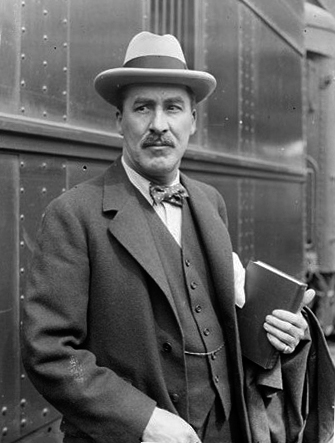
Carter made the hole with a chisel his grandmother had given him for his 17th birthday, while Carnarvon, Lady Evelyn and Callender watched. Carnarvon asked, "Can you see anything?" Carter replied: "Yes, wonderful things!" His own journal entry for that day gives a plainer answer: "Yes, it is wonderful".
He could not yet tell whether it was "a tomb or merely an old cache", meaning a hidden store of goods. He could see a promising sealed doorway between two sentinel statues.
The search had nearly ended before this. In 1914 Carnarvon was granted the right to dig in the valley, and Carter led a systematic search for tombs that earlier expeditions had missed, Tutankhamun's in particular. The First World War interrupted the work. By 1922, after several years of finding little, Carnarvon considered withdrawing his funding. After a discussion with Carter, he agreed to pay for one more season.
Carter went back to a line of huts he had abandoned a few seasons earlier. On 4 November 1922 a worker uncovered a step in the rock. Carter's published account says the workmen found it while digging beneath the remains of the huts. Other accounts credit a boy digging outside the assigned area. Partial digging exposed the top of a mud-plastered doorway stamped with indistinct cartouches, which are oval seals with hieroglyphic writing. Carter had the staircase refilled and sent Carnarvon a telegram. Carnarvon arrived from England with Lady Evelyn on 23 November.
On 24 November the full stairway was cleared, and a seal with Tutankhamun's cartouche was found on the outer doorway. That door was removed and the rubble-filled corridor behind it was cleared, which revealed the door of the tomb itself.