
The weaver's son from Hochburg-Ach who composed Silent Night
Franz Xaver Gruber, who wrote the music for "Stille Nacht" ("Silent Night"), was born on 25 November 1787 in the village of Hochburg-Ach, Upper Austria. His parents were linen weavers. He worked as a primary school teacher and church organist, and he also composed. On Christmas Eve of 1818 he set a poem by a priest to music. The carol became his best-known work.
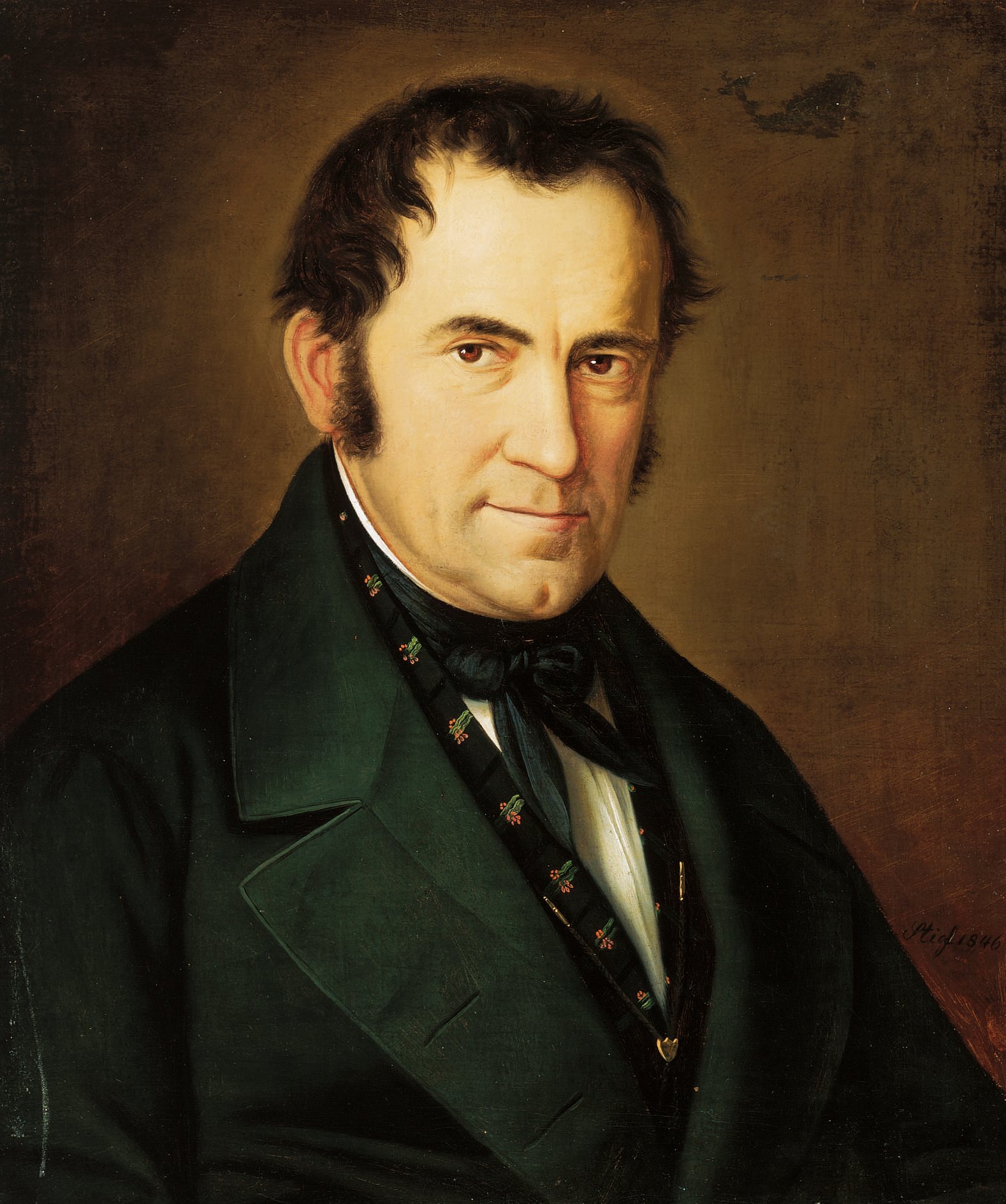
Andreas Peterlechner, the schoolteacher in Hochburg, gave Gruber music lessons. Gruber worked as a weaver until he was 18 and then trained as a schoolteacher. He completed his music education with Georg Hartdobler, the church organist of Burghausen. In 1807 he became the schoolteacher in Arnsdorf. He was also the church caretaker and organist there.
In 1816 he took on extra duties as organist and choirmaster at the Nikolauskirche in the neighbouring village of Oberndorf. Joseph Mohr, a Catholic priest, was assistant priest there. On Christmas Eve of 1818 Mohr showed Gruber a poem he had written in German in 1816. It had six stanzas, or verses. Mohr asked Gruber to set it to music.
The organ was in fine condition, but a yearly tradition of sharing a new carol continued. The two men first sang Stille Nacht at Christmas Mass in St Nicholas Church. Mohr played guitar, and the choir repeated the last two lines of each verse. For a long time, many people thought the carol had been written by Haydn, Mozart or Schubert.
In 1829 Gruber moved to Berndorf. He later moved to Hallein in Salzburg, where he was named choir director, singer and organist. He married three times and died on 7 June 1863. In later years he wrote further arrangements of the carol for organ and for organ with orchestra. He also wrote scores of other carols and masses. Many are still in print and are sung today in Austrian churches.