
Lope de Vega, the boy who traded his breakfast for help writing down his verses, is born in Madrid
Félix Lope de Vega y Carpio was born on 25 November 1562 in Madrid, at the Puerta de Guadalajara, to a family from the valley of Carriedo. His father, Félix de Vega, was an embroiderer. The boy grew up to be a playwright and poet, and a key figure in the Spanish Golden Age of Baroque literature. Miguel de Cervantes called him "The Phoenix of Wits" and "Monster of Nature." He wrote approximately 500 stage plays and 3,000 sonnets.
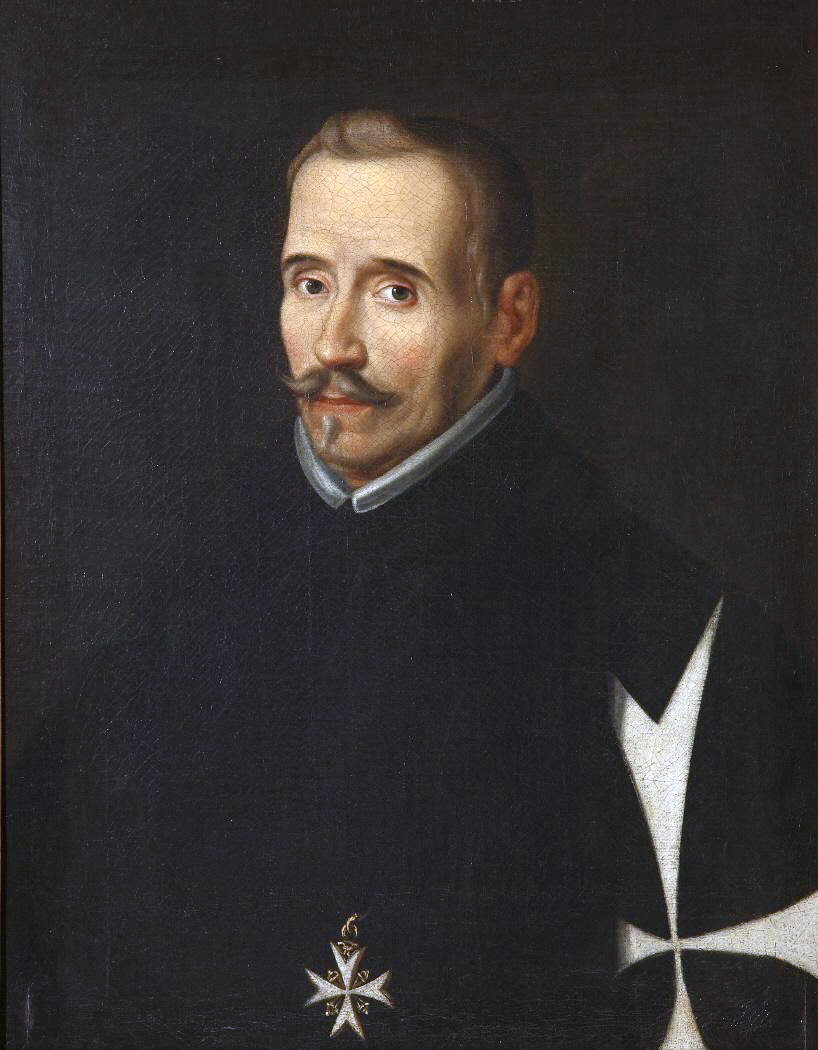
Little is known of his mother, Francisca Fernández Flores. He later took the distinguished surname Carpio from his paternal grandmother, Catalina del Carpio.
His friend and biographer Pérez de Montalbán stated that Lope was reading Spanish and Latin at the age of five. Before he could write, he shared his breakfast with older boys so they would write his verses down for him. By his tenth birthday he was translating Latin verse. He later said he wrote his first play at 12, allegedly El verdadero amante, though these statements are most probably exaggerations.
He studied at the Madrid school of the poet and musician Vicente Espinel, whom he always spoke of with veneration. In his fourteenth year he moved on to the Colegio Imperial, a Jesuit school in Madrid. The Bishop of Ávila recognised his talent and saw him enrolled at the University of Alcalá. Lope meant to become a priest like his patron, but he fell in love and decided celibacy was not for him.
After sailing with the Armada, he was back in Spain by December 1588 and settled in Valencia. There he took part regularly in the Academia de los nocturnos, a literary gathering, and refined a technique known as imbroglio, which weaves two plots together in a single play. With the playwrights Pedro Calderón de la Barca and Tirso de Molina, he defined the characteristics of Spanish Baroque theatre. The sheer size of his output won the admiration of Johann Wolfgang von Goethe.
Away from the stage he produced nine epic poems, along with three novels and four novellas. He was a friend of the writer Francisco de Quevedo and attended the Medrano Academy, the Poetic Academy of Madrid, from 1616 to 1622. He died of scarlet fever in Madrid on 27 August 1635.