
Thomas Edison announces a machine that records and plays sound
On 21 November 1877, Thomas Edison announced his invention of the phonograph, a device able to record and play sound. His first machine recorded on tinfoil wrapped around a grooved cylinder, a method that limited the sound quality and durability of the recording. The invention brought Edison international fame, but took many years to become a commercial success.
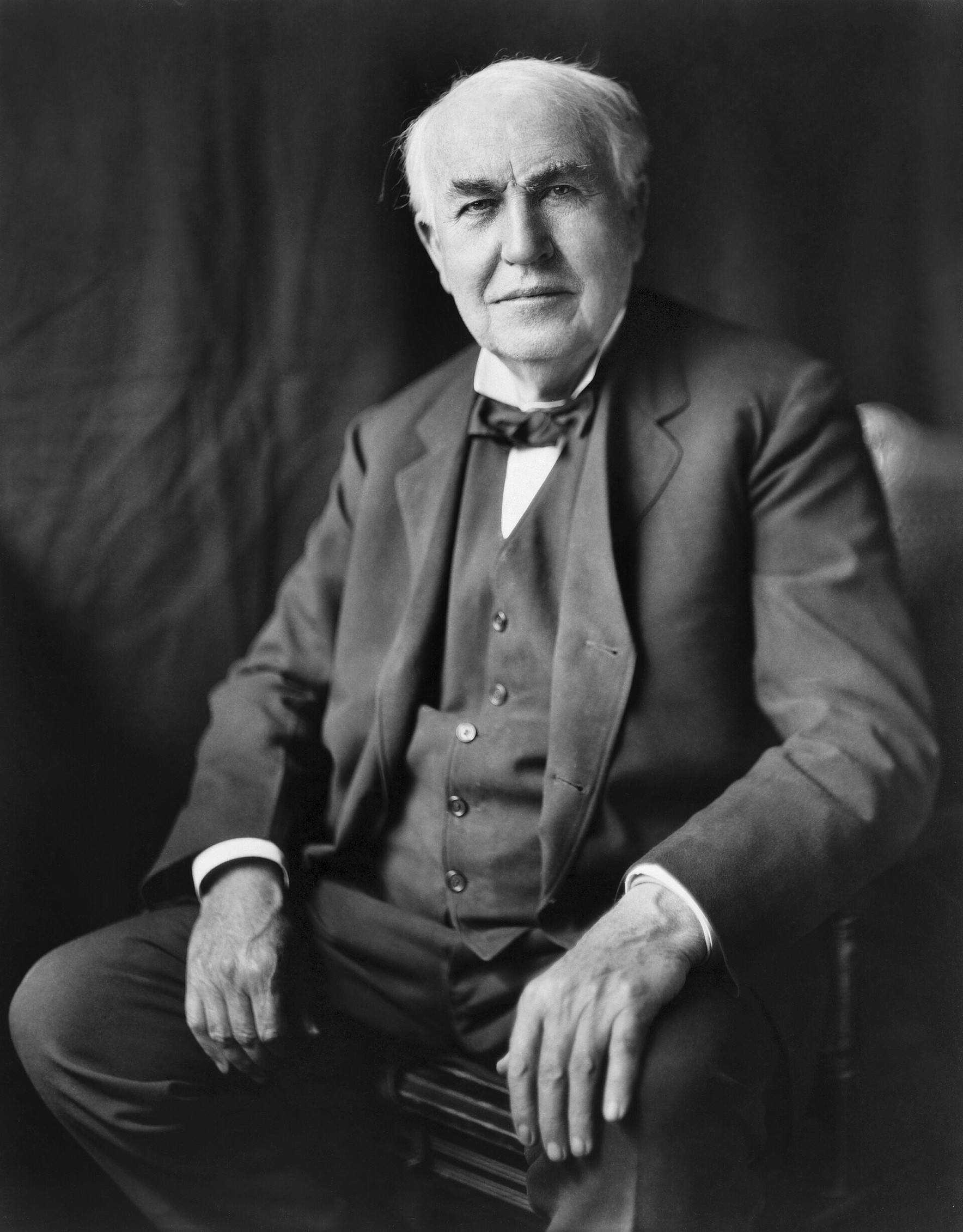
The phonograph grew out of Edison's work in telegraphy, which sent messages over wires. He had long imagined a device that could record incoming messages and replay them. Experiments with Charles Batchelor led to primitive systems for recording and replaying sound. By November, word of the machine was spreading, and Edison promoted it through journalists and public demonstrations.
Born in Milan, Ohio, in 1847, Edison grew up in Port Huron, Michigan, after his family moved there in 1854. His mother, a former school teacher, taught him reading, writing and arithmetic. He attended school for only a few months and learned much through reading and experiments.
As a boy, he sold newspapers, candy and vegetables on trains between Port Huron and Detroit, spending his earnings on electrical and chemical supplies. He also founded the Grand Trunk Herald. Five hundred people subscribed to the paper, which ran twenty-four issues. He displayed a framed copy of its first issue in his home for the rest of his life.
Edison learned from telegraph operators while working on the trains. From 1863 to 1869, he held night-shift telegraphy jobs across Ontario, Michigan, Kentucky, Ohio, and Massachusetts, inventing improvements to the systems he used.
By the age of 29, he owned a telegraph recorder factory in Newark with over one hundred employees. He went on to develop Menlo Park, now considered the first industrial research laboratory, where he drove himself and his staff to exhaustion.