
United Nations adopted children's rights declaration on 20 November 1959
The United Nations General Assembly adopted the Declaration of the Rights of the Child on 20 November 1959, setting out ten principles. It expanded a declaration drafted by Eglantyne Jebb and adopted by the League of Nations in 1924.
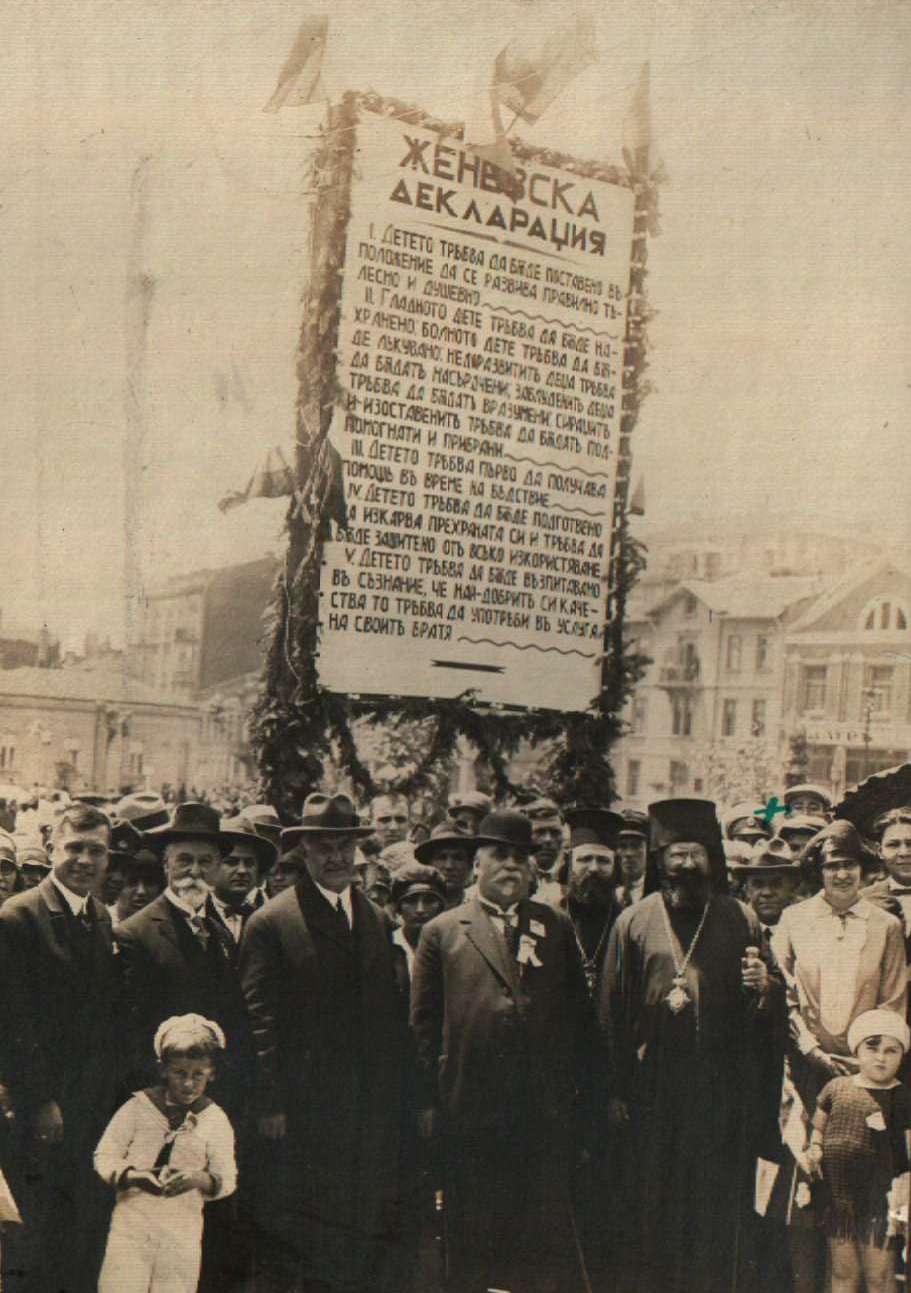
The International Save the Children Union published the original text in Geneva on 23 February 1923. Its five principles called for hungry children to be fed and sick children to be nursed, with shelter and assistance for children without parents or a home.
Children were to receive relief first in times of distress and have the means to develop materially and spiritually. The text called for protection against exploitation and preparation to earn a living. It also said children should be brought up to use their talents in the service of others.
The League of Nations General Assembly endorsed the text on 26 November 1924 as the World Child Welfare Charter. It was the first human rights document approved by an organisation of governments. The League reaffirmed it in 1934. Heads of State and Government pledged to incorporate its principles into domestic law. France ordered it displayed in every school.
After considering an entirely new declaration, the United Nations decided in 1946 to adopt an expanded version of the existing document. Many governments contributed to the drafting, and a version with seven points was adopted in 1948.
The ten-principle declaration followed in 1959. Its adoption date became Universal Children's Day. The United Nations General Assembly later adopted the Convention on the Rights of the Child on 20 November 1989. It entered into force on 2 September 1990.