
George Boole, the shoemaker’s son who turned logic into algebra
George Boole was born on 2 November 1815 in Lincoln, Lincolnshire, England. The son of a shoemaker, he went on to develop Boolean algebra, a way of expressing logical relationships through equations using two values and logical operations. His work became a foundation of digital circuit design and modern computer science.
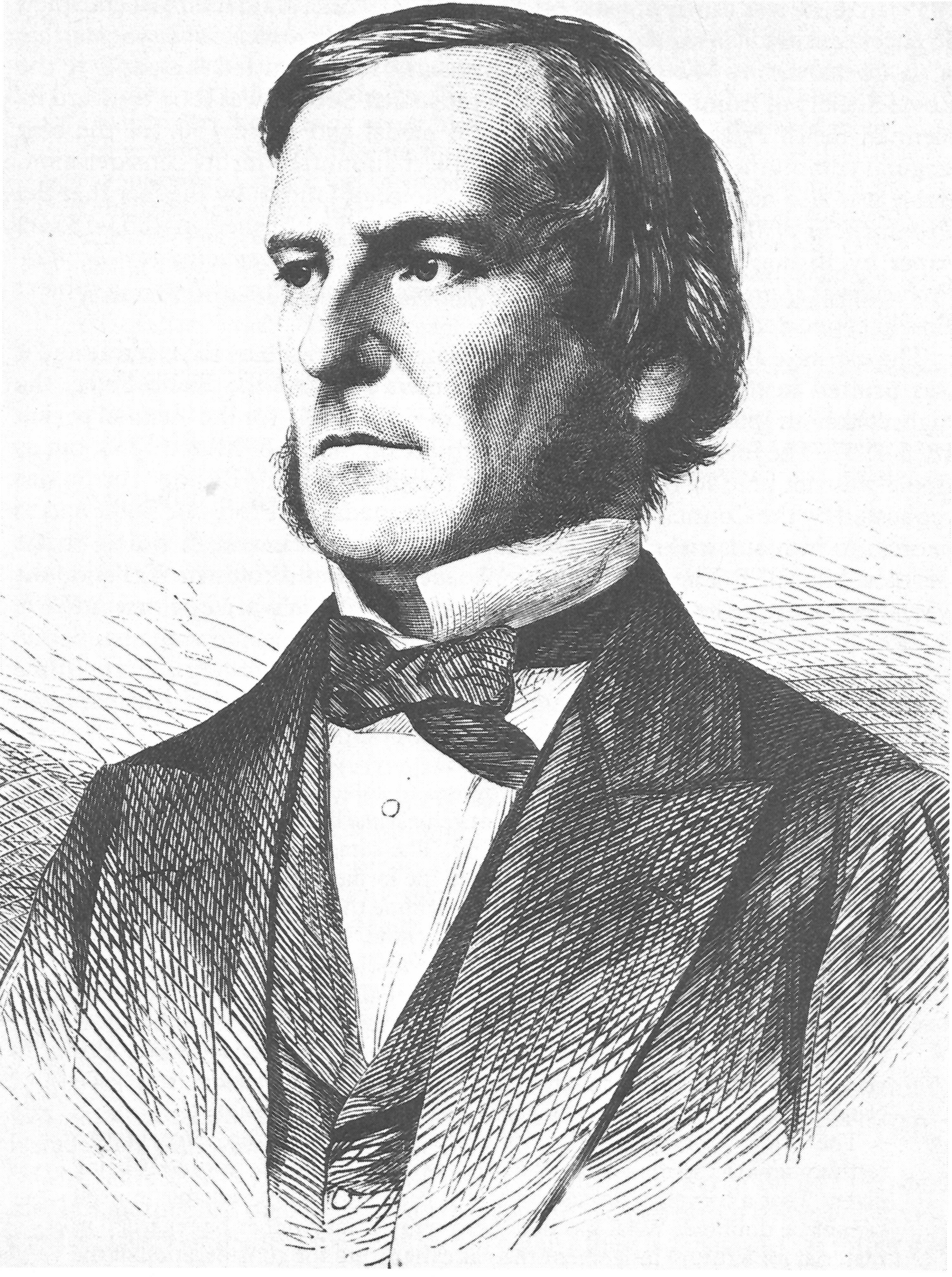
Boole had a primary school education and received lessons from his father, but a serious decline in the family business left little opportunity for further formal teaching. At 16, he began teaching to support his parents and three younger siblings.
He taught himself modern languages and found help obtaining mathematics books. Edward Bromhead helped him with books, while the Rev. George Stevens Dickson gave him a calculus text by Sylvestre François Lacroix. Without a teacher, Boole took many years to master calculus.
At 19, he established his own school in Lincoln. He later took over Hall's Academy in Waddington before returning to Lincoln in 1840 to run a boarding school. Alongside teaching, he read more widely and made contact with British academic mathematicians.
In 1849, he became the first professor of mathematics at Queen's College, Cork, now University College Cork, in Ireland. There he worked mainly on differential equations and algebraic logic.
Boole developed Boolean algebra in 1847. His publications included The Mathematical Analysis of Logic, which introduced symbolic logic, and The Laws of Thought (1854), which contains Boolean algebra. Charles Sanders Peirce and William Stanley Jevons were among the scholars who expanded his work.