
A lost hammer led Eric Lawes to Britain's largest late Roman treasure hoard
On 16 November 1992, retired gardener Eric Lawes was searching a farm field southwest of Hoxne in Suffolk with his metal detector. He was looking for a hammer that his friend, tenant farmer Peter Whatling, had lost. Instead he found silver spoons and gold jewellery, along with numerous gold and silver coins. The two men took out a few items and then stopped. They notified the police and Suffolk County Council, which owned the land. The find was the Hoxne Hoard, the largest hoard of late Roman silver and gold discovered in Britain.
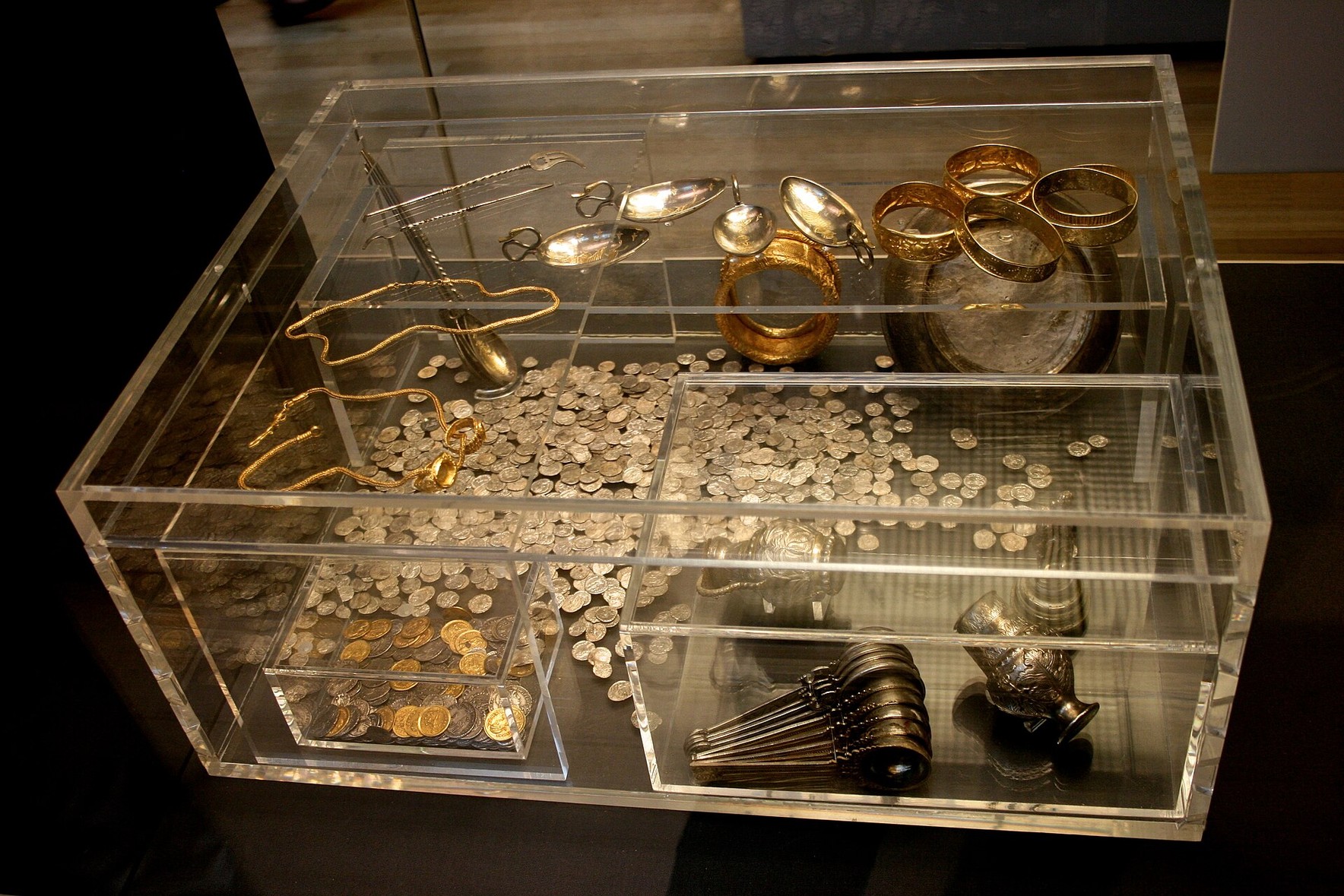
The next day a team from the Suffolk Archaeological Unit carried out an emergency excavation and removed the entire hoard in a single day. Several large blocks of unbroken material were lifted out whole, to be excavated later in a laboratory. Whatling's hammer turned up as well. It was donated to the British Museum.
The hoard held 14,865 Roman gold, silver and bronze coins and about 200 pieces of silver tableware and gold jewellery. It had been packed into a wooden chest, made mostly or entirely of oak. The chest had decayed almost completely, but fragments of it and its fittings were recovered. Ladles and bowls were stacked inside one another. Lawes reported the find promptly, so professional archaeologists could excavate it in situ, meaning exactly where it lay. That let them work out how the objects had been arranged inside the chest. The rare pieces include a gold body-chain and silver-gilt pepper pots, one of them the Empress pepper pot. The coins date the burial to after AD 407, which coincides with the end of Britain as a Roman province. Nobody knows who owned the hoard, but the contents appear consistent with what a single very wealthy family might have owned.
The discovery was leaked to the press. On 19 November the Sun ran a front-page story claiming the hoard was worth £10 million, although its full contents and value were still unknown. The British Museum held a press conference on 20 November. Curators completed the initial cleaning and basic conservation within a month of the discovery.
On 3 September 1993 a coroner's inquest at Lowestoft declared the hoard treasure trove. That meant it was deemed to have been hidden by someone who intended to recover it later. In November 1993 the Treasure Trove Reviewing Committee valued it at £1.75 million. The money was paid to Lawes as finder, and he shared it with Whatling.