
One businessman's fortune brought the Olympics back to an Athens square
On 15 November 1859, athletes gathered in a city square in central Athens for the first modern revival of the Olympic Games. Evangelos Zappas paid for the contests. He was a Greek philanthropist and businessman who had made his fortune in land and agriculture in Wallachia. The disciplines were similar to those of the ancient Games: running, discus, javelin throwing, wrestling, jumping and pole climbing. Zappas is recognised today as one of the founders of the modern Olympic Games, and his Games came before the International Olympic Committee was founded.
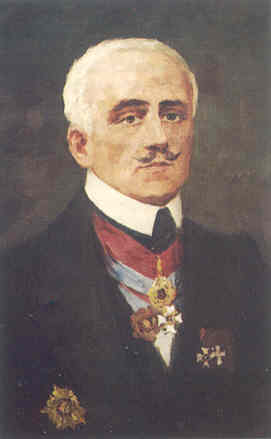
The idea was not new. In 1833 the romantic poet Panagiotis Soutsos, in his work Dialogue of the Dead, proposed reviving the Games in the newly formed Greek state. In 1852 the archaeologist Ernst Curtius said in a lecture that the Olympic events would be revived. Soutsos was the one who inspired Zappas, who resolved to bring the tradition back with his own resources.
In early 1856 Zappas sent a letter through diplomatic channels to King Otto of Greece, offering to fund the revival and give cash prizes to the winners. Some resisted. A number of Greek politicians saw athletic games as a throwback to ancient times, unsuited to the modern era, and the foreign minister, Alexandros Rizos Rangavis, suggested an industrial and agricultural exposition instead. Months passed with no official answer. Then, in July 1856, an article by Soutsos in the Greek press made the offer public. King Otto agreed to athletics competitions every four years, held alongside industrial and agricultural expositions, and Zappas gave the government the money to set up an Olympic Trust Fund.
The organisers meant to use the ancient Panathenaic Stadium, but it was not ready in 1859. It first hosted a modern Olympic Games in 1870. No such games had been held there since antiquity. More Games followed in 1875 and 1888.
Zappas died in 1865 and left a fortune to fund future Olympiads at the stadium. The money paid for permanent sporting facilities in Athens and for the Zappeion exhibition and conference centre, named after him and his cousin Konstantinos Zappas. The legacy of both cousins also helped fund the Olympic Games of 1896.