
Robert Louis Stevenson, the sickly boy behind Treasure Island, is born
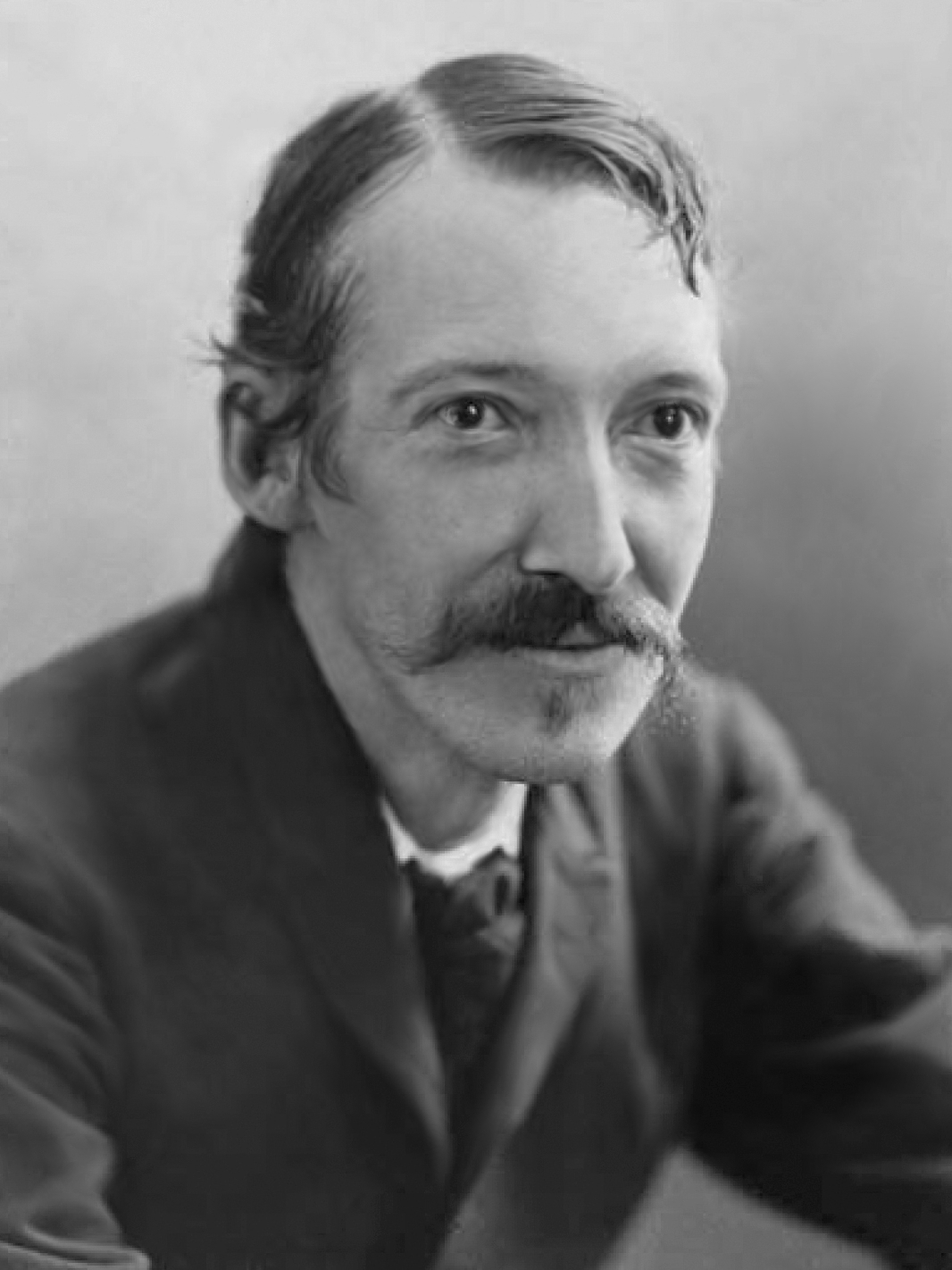
On 13 November 1850, Robert Louis Stevenson was born at 8 Howard Place, Edinburgh, Scotland. His parents were Thomas Stevenson, a lighthouse engineer, and his wife, Margaret Isabella. He was christened Robert Lewis Balfour Stevenson. Serious bronchial trouble affected him for much of his life, but he still wrote prolifically and travelled widely. His best-known books are the novels Treasure Island (1883), Strange Case of Dr Jekyll and Mr Hyde (1886) and Kidnapped (1886), and the poetry collection A Child's Garden of Verses (1885).
Lighthouse design was the family profession. Illness came early. In 1851 the family moved to a damp, chilly house at 1 Inverleith Terrace, which made the boy's coughs and fevers worse. When he was six they moved again, to the sunnier 17 Heriot Row.
His nurse, Alison Cunningham, known as Cummy, read to him from John Bunyan and the Bible as he lay sick in bed. He recalled those days in "The Land of Counterpane" and dedicated A Child's Garden of Verses to her. He was a late reader and learned at 7 or 8. Before that he dictated stories to his mother and his nurse.
His father was proud of this. Thomas had written stories in his spare time until his own father found them and told him to "give up such nonsense and mind your business." When Robert was 16, Thomas paid to print his first publication, The Pentland Rising: A Page of History, 1666. It was an account of the Covenanters' rebellion and came out in 1866, on the 200th anniversary of the event. In November 1867 Robert entered the University of Edinburgh to study engineering, and he showed no enthusiasm for it from the start. At about 18 he changed the spelling of "Lewis" to "Louis".
As a young man he moved in London literary circles. Sidney Colvin, Andrew Lang, Edmund Gosse, Leslie Stephen and W. E. Henley all encouraged him, and Henley may have been the model for Long John Silver. In 1890 he settled in Samoa. He was alarmed at growing European and American influence in the South Sea islands, and his writing turned from romance and adventure toward a darker realism. In 2018 he was ranked behind Charles Dickens as the 26th-most-translated author in the world.