
Auguste Rodin, future founder of modern sculpture, is born in Paris
François Auguste René Rodin was born into a working-class family in Paris on 12 November 1840. He was the second child of Marie Cheffer and Jean-Baptiste Rodin, a police department clerk. He became a French sculptor considered a founder of modern sculpture, known for works including The Kiss, The Burghers of Calais, Monument to Balzac and The Gates of Hell. The Gates of Hell is a sculptural composition that includes a figure later known as The Thinker.
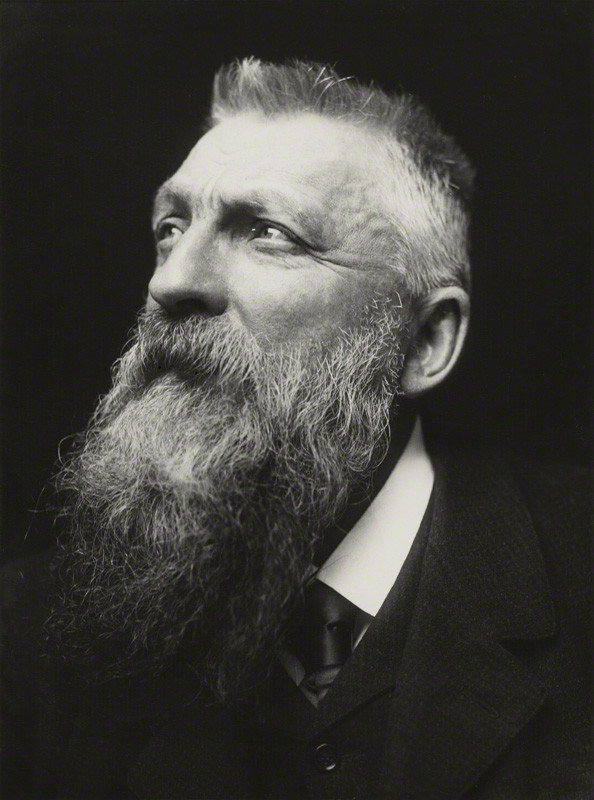
Rodin was largely self-educated and started drawing at age 10. Between ages 14 and 17 he attended the Petite École, a school specialising in art and mathematics. His drawing teacher there, Horace Lecoq de Boisbaudran, wanted students to observe with their own eyes and draw from memory. Much later in life, Rodin said he was grateful to him.
In 1857 Rodin submitted a clay model to the École des Beaux-Arts and was turned down. Two later applications also failed. The judges had Neoclassical tastes, and that may explain the refusals, since Rodin had been trained in light, 18th-century sculpture. For most of the next two decades he made his living as a craftsman, producing decorative objects and ornaments for buildings.
His sister Maria died in 1862, and he joined a Catholic order, the Congregation of the Blessed Sacrament, as a laybrother. Father Peter Julian Eymard, its founder and head, recognised his talent and encouraged him to keep sculpting, offering the order's garden shed as a studio. Rodin made a bust of Eymard in 1863 to thank him. It is the earliest of his works that can be clearly dated.
In 1875 he spent two months in Italy, and the work of Donatello and Michelangelo changed his direction. "It is Michelangelo who has freed me from academic sculpture," he said. Back in Belgium he began The Age of Bronze, a life-size male figure. It was so lifelike that critics accused him of casting it from a living model. Many of his later works were criticised as unfinished or fragmented, but he would not change his style. By 1900 he was a world-renowned artist. Camille Claudel and Constantin Brâncuși were among his students.