
A Marbach boy known as Fritz grew into one of Germany's most important playwrights
Friedrich Schiller was born on 10 November 1759 in Marbach, in the Duchy of Württemberg. He was the only son of military doctor Johann Kaspar Schiller and Elisabetha Dorothea Schiller. They also had five daughters, the eldest of them Christophine. Nearly everyone called him Fritz. He became a playwright, poet, philosopher and historian, and he is considered one of Germany's most important classical playwrights.
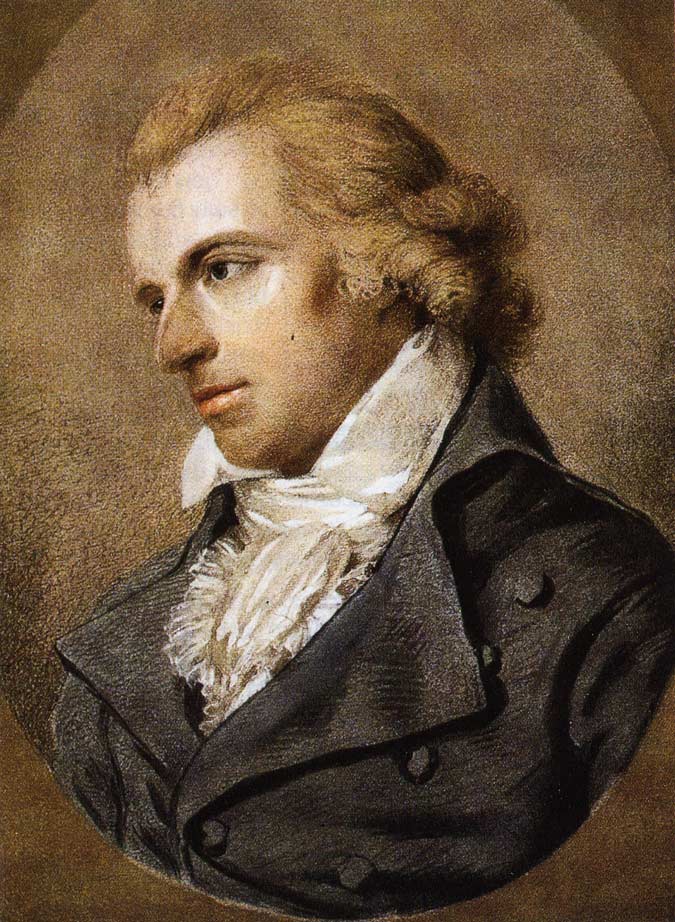
When he was a boy, the family moved to the town of Lorch. His parents wanted him to become a priest, so they had the village priest, Father Moser, teach him Latin and Greek. The boy was excited by the idea. He often put on black robes and pretended to preach. He later named the cleric in his first play after Moser.
In 1773 he entered the Karlsschule Stuttgart, an elite military academy. He started in law, switched to medicine and graduated as a doctor of medicine in 1780. While there he read Rousseau and Goethe and wrote The Robbers, a play about two aristocratic brothers. Karl Moor, the elder, leads rebellious students into the Bohemian forest, where they become Robin Hood-like bandits. Franz, the younger, schemes to inherit their father's estate. The play's critique of social corruption astounded its first audience and made Schiller an overnight sensation. Because of it, he was later made an honorary member of the French Republic.
He settled in Weimar in 1787. Two years later he became professor of History and Philosophy at the University of Jena. In his inaugural lecture, delivered on 26 May 1789, he set out his philosophy of history and the moral purpose of studying it. He married Charlotte von Lengefeld on 22 February 1790, and they had four children between 1793 and 1804.
His friendship with Johann Wolfgang von Goethe began in 1788 and was productive, if complicated. The two often discussed aesthetics, meaning questions of beauty and art, and Schiller encouraged Goethe to finish works he had left as sketches. Those conversations led to the period now called Weimar Classicism. Together they founded the Weimar Theater, which became the leading theater in Germany. In 1802 the Duke of Saxe-Weimar ennobled Schiller, making him a member of the nobility, and he added "von" to his name.